














While the overall number of suicides in Lithuania is decreasing and more young people are seeking emotional help, the problem persists among people aged over 60.
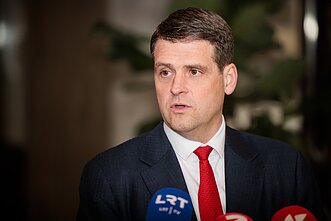
“We have a problem, and I think we have a really big problem, with the group of people over 60,” MP Linas Slušnys said at a conference about suicide on Tuesday.
“And here is the question, […] how much of it is because of frustration, and how much of it is because of inability to accept help,” he asked.

According to the MP, young people nowadays have practically no problems in approaching a psychological health specialist and they are more courageous in doing so, whereas the older generation is sceptical about seeking professional help for their emotional well-being.
“However, as regards people of my generation and older, when offered such a service – a psychiatrist, a psychologist – they smile rather ironically, the stigma is very strong, and they say I am not a mentally ill person, I don’t understand why I have to be there, and that’s the end of the story,” Slušnys said.
According to the Institute of Hygiene, 1,018 suicides were recorded in Lithuania in 2011, or 33.6 cases per 100,000 population. Last year, the number of suicides was half as high – 562, or 19.6 cases per 100,000 population.
The European Union’s average is currently 13 cases per 100,000 inhabitants.
According to Ignas Rubikas of the Ministry of Health, it is very important to spot someone who is at risk of suicide, to recognise the signs and to be able not only to make contact, but also to refer them to the appropriate specialists.
“Public training, which has been going on in Lithuania for a number of years, is very important in this area. I am pleased that last year that number actually increased significantly and over 4,000 people were trained at the Public Health Bureau on how to recognise the threat, how to make contact and then how to refer for help,” Rubikas said.

According to the specialist, the suicide prevention communication campaign and the “Tu Esi” (“You Are”) brand are being used to help as many people as possible, and a wide range of services are being offered, including additional funding for initial psycho-social assessment, specialised therapies, and, starting this year, the increased availability of ASSIP therapy.
“This is a series of four counselling sessions developed by international researchers and being adapted in Lithuania, and it helps to reduce the risk of repeat suicide attempts,” Rubikas said.
Specialists taking part in the conference stressed the importance of inter-institutional cooperation for effective suicide prevention and called in particular to improve cooperation with the media, which would be offered assistance in the preparation of reports on suicides.
“We are developing an artificial intelligence tool for media representatives, where they will be able to validate content on suicide issues, so that the content is in line with the World Health Organization’s recommendations,” said Sandra Getautė of the Institute of Hygiene.

Newsletter
Every Friday morning.